How Often Should You Visit a Dentist? Complete Preventive Dental Care Guide
Introduction
Imagine this: You feel perfectly fine. No tooth pain. No bleeding gums. No visible cavities. So, you assume everything is okay.
Months pass. One day, a mild toothache starts. You ignore it. Eventually, the pain becomes unbearable, and when you finally visit the dentist, what could have been a simple filling now requires a root canal.
This is more common than most people realize.
According to dental research, many oral health problems begin silently. Cavities, gum disease, enamel erosion, and plaque buildup often develop without obvious symptoms in the early stages.
This raises an important question:
How often should you visit a dentist?
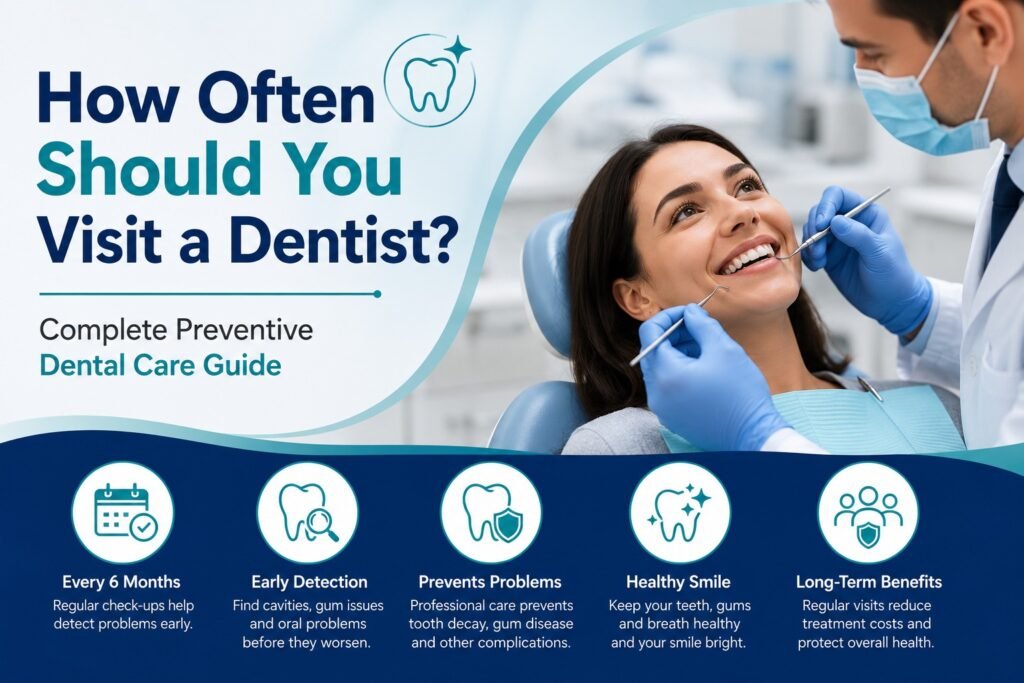
The short answer is simple: Most people should visit a dentist every 6 months for a routine dental checkup and cleaning.
However, depending on your oral health, age, lifestyle, and medical history, your dentist may recommend more frequent visits.
This preventive dental care guide explains everything you need to know.
Why Regular Dental Visits Matter
Regular dental visits help prevent cavities, gum disease, tooth loss, and costly treatments through early diagnosis and professional care.
Dental problems rarely appear overnight. They build gradually.
Regular visits help identify:
- Tooth decay
- Gum infections
- Plaque buildup
- Cavities
- Oral cancer signs
- Bad bite alignment
Early detection means simpler, faster, and less expensive treatment.
How Often Should Adults Visit a Dentist?
Most adults should visit a dentist every 6 months.
This schedule works well for people with average oral health.
However, some adults may need visits every 3–4 months.
You may need frequent visits if you have:
- Gum disease
- Smoking habits
- Diabetes
- Frequent cavities
- Dental implants
- Braces or aligners
Comparison Table
| Oral Health Condition | Recommended Visit Frequency |
|---|---|
| Healthy Teeth | Every 6 months |
| Frequent Cavities | Every 3–4 months |
| Gum Disease | Every 3 months |
| Braces/Aligners | Every 4–6 weeks |
| Dental Implants | Every 3–6 months |
How Often Should Children Visit a Dentist?
Children should visit the dentist every 6 months or as advised.
Early dental care builds lifelong oral hygiene habits.
Regular checkups help monitor:
- Tooth development
- Cavities
- Jaw growth
- Bite alignment
Parents often wait until a problem appears. That is risky.
Preventive care is always better.
What Happens During a Dental Checkup?
A routine dental visit usually includes examination, cleaning, and preventive guidance.
Typical dental checkup includes:
Oral Examination
Dentists inspect:
- Teeth
- Gums
- Tongue
- Jaw
Professional Cleaning
Removes:
- Plaque
- Tartar
- Surface stains
X-rays (if needed)
Used for hidden problems like:
- Cavities
- Bone loss
- Infection
Oral Health Advice
Dentists recommend:
- Brushing techniques
- Flossing methods
- Diet improvements
Warning Signs You Should Visit a Dentist Immediately
Do not wait 6 months if you experience:
- Tooth pain
- Bleeding gums
- Bad breath
- Loose teeth
- Swollen gums
- Sensitivity to hot or cold
- Jaw pain
These symptoms can indicate serious issues.
Early care prevents complications.
Benefits of Preventive Dental Care
Preventive dental care saves money, reduces pain, and improves long-term oral health.
Key Benefits:
- Prevents major dental issues
- Reduces treatment costs
- Improves oral hygiene
- Maintains fresh breath
- Protects natural teeth
- Boosts confidence
Think of it as maintenance for your smile.
Professional Cleaning vs At-Home Cleaning
Many people think brushing alone is enough.
It is not.
| Feature | Home Cleaning | Professional Cleaning |
|---|---|---|
| Removes Food Particles | Yes | Yes |
| Removes Plaque | Partial | Complete |
| Removes Tartar | No | Yes |
| Deep Cleaning | No | Yes |
Professional cleaning reaches areas that daily brushing misses
Who Needs More Frequent Dental Visits?
Some people need extra care.
High-Risk Groups
- Smokers
- Diabetic patients
- Pregnant women
- Seniors
- People with braces
- Patients with implants
These groups face higher dental risks.
More frequent monitoring is essential.
Common Dental Problems Prevented by Regular Visits
Routine checkups can help prevent:
- Tooth decay
- Cavities
- Gum disease
- Tooth loss
- Oral infections
- Enamel damage
- Bad breath
Prevention is always easier than treatment.
How to Maintain Good Oral Health Between Visits
Your daily habits matter.
Follow these simple steps:
Brush Twice Daily
Use fluoride toothpaste.
Floss Daily
Removes food stuck between teeth.
Limit Sugary Foods
Sugar feeds harmful bacteria.
Drink Water
Keeps mouth clean.
Avoid Smoking
Smoking increases gum disease risk.
Finding the Best Dentist Near You
Choosing the right dentist matters.
Look for:
- Experienced dentists
- Modern equipment
- Good reviews
- Hygiene standards
- Emergency support
If you are searching for a dentist near me or a dental clinic in Varanasi, choose a clinic focused on preventive and patient-centered care.
Why Choose Cherian Clinic in Varanasi?
Cherian Clinic is trusted for comprehensive dental care in Varanasi.
Why Patients Choose Us
- Experienced dental experts
- Advanced technology
- Comfortable treatment
- Personalized care
- Preventive dental focus
Services include:
- Dental checkups
- Teeth cleaning
- Root canal treatment
- Dental implants
- Braces & aligners
- Cosmetic dentistry
How Much Does a Routine Dental Checkup Cost?
Costs vary based on:
- Location
- Clinic
- Services included
Routine preventive visits are far more affordable than advanced procedures like implants or root canals.
Regular visits save money in the long run.
How Often Should You Visit a Dentist? Frequently Asked Questions
Is visiting the dentist every 6 months necessary?
Yes. For most people, every 6 months helps maintain good oral health.
Can I skip dental cleanings if I brush well?
No. Brushing cannot remove tartar buildup completely.
How often should teeth cleaning be done?
Most people benefit from professional cleaning every 6 months.
Do children need regular dental visits?
Yes. Children need routine checkups to monitor healthy growth.
Can dental problems exist without pain?
Yes. Many serious dental problems develop silently.
Conclusion
Your oral health affects more than your smile. It impacts your confidence, comfort, and overall well-being.
The good news?
Most dental problems are preventable.
Visiting a dentist every 6 months can help you avoid pain, reduce costs, and keep your teeth healthy for years.
Don’t wait for discomfort to appear.
A healthy smile starts with preventive care—and one timely dental visit can make all the difference.