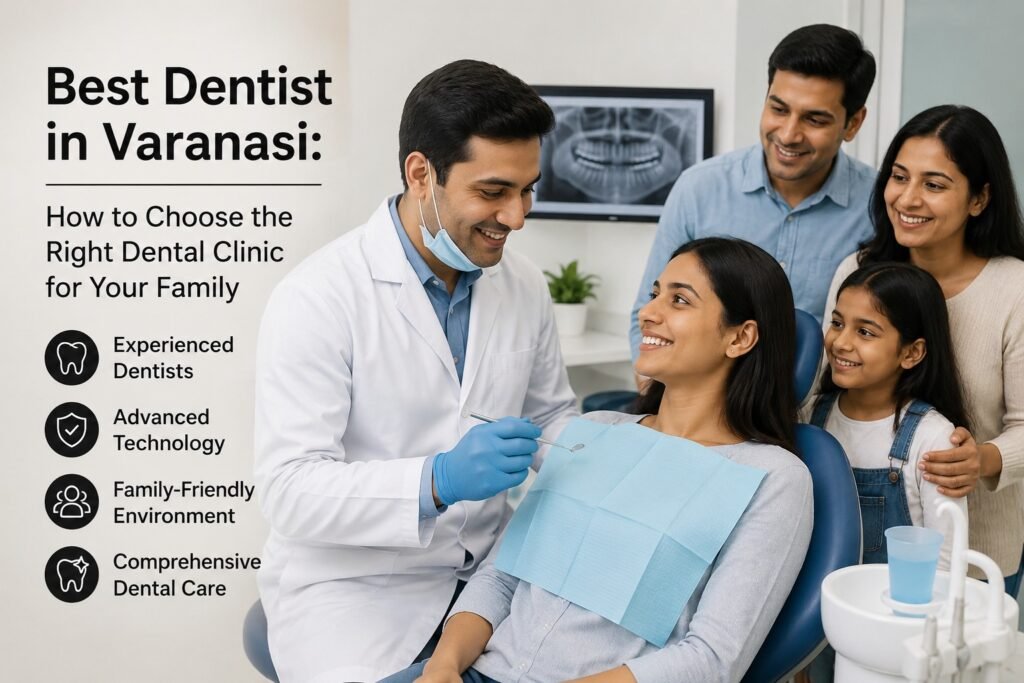
Best Dentist in Varanasi: What to Look for Before Choosing a Dental Clinic
Choosing the best dentist in Varanasi is not simply about finding the clinic with the highest rating or the lowest treatment price. The right dental clinic should combine qualified dental expertise, appropriate diagnostic technology, transparent treatment planning, hygiene standards, patient communication, and services that match the needs of your entire family.
For parents, the question may be about a child’s first dental visit. For a working professional, it may be teeth cleaning, braces, aligners, or smile enhancement. For an older family member, the priority could be gum disease, missing teeth, dentures, or dental implants. A good family dental clinic should be able to assess each situation individually rather than offering the same solution to everyone.
According to the World Health Organization (WHO), oral diseases affect billions of people globally, while untreated dental caries remains one of the world’s most common health conditions. Many oral conditions are preventable or manageable when identified early.
For families searching for a dentist near me, dental clinic in Varanasi, family dentist in Varanasi, or best dental clinic in Varanasi, this guide explains what to look for, what questions to ask, and how to compare clinics before making a decision.
Medical note: This article provides general educational information and does not replace an individual dental examination or professional diagnosis.
1. What Makes a Dentist the Right Choice for Your Family?
Quick answer: The right family dentist should have appropriate qualifications, relevant clinical experience, good communication, suitable diagnostic facilities, strong infection-control practices, transparent treatment planning, and services for different age groups. A trustworthy clinic should explain available options rather than pushing unnecessary procedures.
Choosing a dentist is a healthcare decision, not just a shopping decision. Price and online ratings can be useful starting points, but they should not be the only criteria.
Look for:
- Recognized dental qualifications
- Relevant clinical experience
- Clear treatment explanations
- Appropriate diagnostic technology
- Personalized treatment plans
- Good hygiene and sterilization practices
- Emergency or urgent-care guidance
- Preventive dental education
- Transparent estimates
- Genuine patient feedback
- Follow-up and aftercare
The American Dental Association emphasizes that oral-care recommendations should be personalized according to individual needs and risk factors rather than treating every patient identically.
Example: A child with early cavities, an adult with gum bleeding, and a senior with missing teeth may all visit the same clinic, but their examination and treatment plans should be completely different.
Practical tip: Before booking, ask: “Will the dentist explain the diagnosis, alternatives, expected outcomes, risks, and maintenance requirements before treatment?”
2. Why Experience Matters When Choosing a Dentist in Varanasi
Quick answer: Experience can help a dentist recognize clinical patterns, manage different patient needs, and plan treatment more systematically. However, years of experience should be considered alongside qualifications, current clinical knowledge, ethical decision-making, technology, and the dentist’s ability to explain treatment clearly.
For families, experience matters because dental problems rarely look exactly the same from one patient to another.
A dentist may encounter:
- Simple cavities
- Gum inflammation
- Tooth sensitivity
- Impacted teeth
- Missing teeth
- Dental anxiety
- Misaligned teeth
- Cosmetic concerns
- Complex restorative requirements
Dr. Navneet Kaur, Director at Cherian Clinic, has more than 15 years of professional experience across dentistry and healthcare leadership. Her qualifications include a Bachelor of Dental Surgery (BDS) from Panjab University and a Certificate in Dental Implantology from Green Park Dental Institute, New Delhi.
Her professional background also includes clinical leadership and training responsibilities. She previously worked with Daffodil Dental in New Delhi and as an Associate Dental Surgeon at Fortis Hospital, Chandigarh.
This background is relevant when evaluating a dental provider because clinical experience is not just about the number of years—it also includes exposure to different cases, treatment planning, patient communication, and professional development.
Practical tip: Look for a dentist’s actual qualifications and professional background rather than relying only on marketing phrases such as “top,” “No. 1,” or “best.”
3. How Important Are Dental Qualifications and Certifications?
Quick answer: Dental qualifications establish the professional foundation for clinical practice, while additional certifications may demonstrate training in specific areas. Patients should verify the dentist’s qualifications, areas of expertise, and professional role before selecting a clinic, particularly for complex procedures such as implants, orthodontics, or extensive restorative treatment.
For example, Dr. Navneet Kaur’s professional education includes:
- BDS – Panjab University, Chandigarh
- Certificate in Dental Implantology – Green Park Dental Institute, New Delhi
- Fellowship in Facial Aesthetics – Trinity Aesthetics Academy, Mumbai
Her broader professional experience also includes clinical management, dental coaching, protocol development, staff training, and patient-care leadership.
For patients, this creates an important distinction:
| What to check | Why it matters |
|---|---|
| Basic dental qualification | Establishes professional dental training |
| Additional certifications | Shows focused education in specific areas |
| Clinical experience | Indicates exposure to different cases |
| Continuing education | Helps maintain current professional knowledge |
| Treatment-specific expertise | Important for complex procedures |
| Professional transparency | Helps patients make informed decisions |
Practical tip: If you are considering a specialized procedure, ask who will perform it, what their relevant training is, and what alternatives are available.
4. Why Advanced Dental Technology Matters
Quick answer: Modern dental technology can support diagnosis, treatment planning, documentation, and patient education. Tools such as digital imaging, intraoral cameras, and 3D imaging may provide additional information when clinically appropriate. Technology should support professional judgment—not replace a dentist’s examination and clinical decision-making.
At Cherian Clinic, the dental-care approach includes modern diagnostic and treatment technologies for appropriate cases. The clinic highlights digital X-rays, intraoral imaging, and modern diagnostic tools as part of its dental services.
Technology may help dentists:
- Examine areas that are difficult to see directly.
- Document dental conditions.
- Explain findings visually.
- Plan selected procedures more precisely.
- Monitor changes over time.
However, more technology does not automatically mean better dentistry.
A responsible dentist should recommend an X-ray or scan when it is clinically justified rather than simply because the equipment is available.
Example: A patient with suspected hidden decay may require imaging after an examination. Another patient with no clinical indication may not need the same imaging.
Practical tip: Ask, “What information will this scan provide, and how will it change my treatment plan?”
5. What Dental Services Should a Family Clinic Provide?
Quick answer: A family dental clinic should ideally cover preventive, restorative, orthodontic, gum, cosmetic, and tooth-replacement needs or provide appropriate referrals when a specialist is required. A broad service range makes ongoing family care more convenient, but treatment should always be based on diagnosis and individual need.
Common dental services families may need include:
- Dental checkups
- Teeth cleaning and scaling
- Cavity filling
- Root canal treatment
- Gum disease treatment
- Teeth whitening
- Braces
- Clear aligners
- Dental implants
- Smile enhancement
- Preventive dental care
- Oral-health guidance
Cherian Clinic’s published dental services include dental implants, braces and aligners, teeth cleaning, gum-problem treatment, teeth whitening, cavity filling, and root canal treatment. (Cherian Clinic)
The advantage of a comprehensive clinic is continuity. A child, parent, and grandparent can potentially receive assessment within the same healthcare environment while still receiving individualized treatment.
Practical tip: Don’t select a clinic simply because it offers many procedures. Check whether the clinic explains why a particular service is appropriate for your condition.
6. How Should a First Dental Consultation Work?
Quick answer: A first dental consultation should begin with understanding the patient’s concerns and medical and dental history, followed by an appropriate examination. Depending on the findings, the dentist may recommend cleaning, preventive care, imaging, or further treatment. The patient should receive understandable information before agreeing to a procedure.
A useful consultation generally follows this sequence:
Step 1 — Discuss your concern
Explain pain, sensitivity, bleeding gums, cosmetic concerns, previous treatment, or other symptoms.
Step 2 — Review relevant history
The dentist considers previous dental work, medications, medical conditions, allergies, and oral-health habits where relevant.
Step 3 — Clinical examination
Teeth, gums, bite, soft tissues, and other oral structures are assessed.
Step 4 — Diagnostic testing if required
X-rays or other imaging may be recommended when clinically appropriate.
Step 5 — Diagnosis and explanation
The dentist explains what has been identified.
Step 6 — Treatment options
Where alternatives exist, the dentist should explain them, including benefits, limitations, risks, expected maintenance, and approximate costs.
Step 7 — Follow-up plan
The patient receives guidance about prevention, treatment, and future monitoring.
This approach helps turn a dental visit into an informed healthcare decision rather than a procedure-focused transaction.s
7. How Can You Compare Two Dental Clinics in Varanasi?
Quick answer: Compare dental clinics using clinical expertise, qualifications, services, technology, hygiene, communication, patient reviews, accessibility, treatment transparency, and follow-up—not just price or star rating. The best choice depends on your family’s actual needs and the quality of care you can verify.
Dental Clinic Comparison Checklist
| Factor | Clinic A | Clinic B |
|---|---|---|
| Dentist qualifications | Verify | Verify |
| Relevant experience | Compare | Compare |
| Preventive care | Check | Check |
| Specialist services | Check | Check |
| Diagnostic technology | Check | Check |
| Hygiene standards | Observe | Observe |
| Treatment explanation | Compare | Compare |
| Written estimate | Ask | Ask |
| Patient reviews | Verify | Verify |
| Follow-up support | Ask | Ask |
| Location/accessibility | Consider | Consider |
A clinic with a lower initial price may not necessarily be the lower-cost option if treatment is incomplete or requires repeated visits. Likewise, a higher price does not automatically indicate better quality.
Practical tip: Compare the quality and suitability of the treatment plan, not only the quoted amount.s
8. What Should You Look for in Dental Patient Reviews?
Quick answer: Useful patient reviews should provide specific information about communication, comfort, punctuality, treatment explanations, staff behavior, hygiene, follow-up, and overall experience. A high rating can be a helpful trust signal, but reviews should be evaluated for patterns and authenticity rather than treated as proof that every patient will receive identical results.
For example, compare these two reviews:
Less useful:
“Best dentist. Amazing clinic.”
More informative:
“The dentist explained my treatment options clearly, answered my questions, and guided me about aftercare.”
The second review provides more information about the patient’s experience.
Cherian Clinic currently displays patient-review and rating information on its website, including a 4.9 average rating, 200+ reviews, and 5K+ patients treated. These figures are clinic-reported trust signals and should be considered alongside the actual content of patient feedback and the dentist’s qualifications.s
Practical tip: Read recent reviews across more than one platform and look for recurring themes rather than relying on a single testimonial.
9. Why Preventive Dentistry Should Be a Family Priority
Quick answer: Preventive dentistry focuses on identifying and managing oral-health risks before they become more complicated. Regular examinations, appropriate professional cleaning, fluoride exposure, good brushing and interdental cleaning, healthy dietary habits, and risk-based follow-up can help reduce preventable oral disease.
The WHO reports that most oral-health conditions are largely preventable and that untreated dental caries and periodontal disease remain major global problems.
For families, prevention can include:
- Regular dental examinations
- Twice-daily brushing with fluoride toothpaste
- Cleaning between teeth
- Limiting frequent free-sugar intake
- Avoiding tobacco
- Protecting teeth during sports
- Early assessment of dental pain or bleeding
- Age-appropriate care for children
The ADA also notes that dental recall intervals should be tailored according to individual disease risk rather than assuming that one schedule works equally well for everyone.
Example: Someone with frequent cavities may need closer professional monitoring than a low-risk patient with stable oral health.
Practical tip: Ask your dentist, “Based on my risk factors, when should I return for my next examination?”
10. How Do You Choose a Dentist for Children?
Quick answer: Choose a dentist who communicates well with children, emphasizes prevention, explains procedures in an age-appropriate way, and can guide parents about brushing, fluoride, diet, habits, and developing teeth. Children should not be treated as small adults; their dental needs change as they grow.
Parents should consider:
- Child-friendly communication
- Preventive education
- Cavity-risk assessment
- Fluoride guidance
- Dietary advice
- Monitoring of tooth development
- Management of dental anxiety
- Appropriate orthodontic evaluation when indicated
Parents should also avoid waiting until a child has severe tooth pain before seeking dental advice.
A family dentist can help parents establish healthy routines early, making dental visits a normal part of healthcare rather than something associated only with pain.
Practical tip: Ask whether the dentist explains oral-care instructions directly to the child as well as the parent.
11. How Do You Choose a Dentist for Older Adults?
Quick answer: Older adults may require additional attention to missing teeth, gum health, tooth wear, dry mouth, dentures, implants, medication-related oral changes, and overall function. The right dentist should review the patient’s medical and dental history and coordinate care when other health conditions affect dental treatment.
Older family members may experience:
- Tooth loss
- Gum disease
- Root caries
- Dry mouth
- Denture-related problems
- Difficulty chewing
- Tooth sensitivity
- Oral soft-tissue changes
WHO identifies tooth loss and periodontal disease among major oral-health concerns across the life course.
A comprehensive dental assessment can help determine whether preventive care, restorative treatment, tooth replacement, or maintenance is appropriate.
Practical tip: Bring a current medication list to the dental appointment and tell the dentist about relevant medical conditions.
12. What Are the Warning Signs That You Should See a Dentist?
Quick answer: Do not wait for a routine appointment if you have persistent tooth pain, swelling, bleeding gums, unexplained sensitivity, broken teeth, facial swelling, difficulty chewing, persistent bad breath, loose teeth, or an oral lesion that does not resolve. Urgent symptoms may require prompt professional assessment.
Seek dental advice if you notice:
- Persistent toothache
- Swollen gums
- Facial or jaw swelling
- Repeated gum bleeding
- Tooth mobility
- Broken or fractured teeth
- Severe sensitivity
- Persistent bad breath
- Difficulty chewing
- A dental abscess or pus
- Persistent mouth sores
Untreated dental caries can progress to pain, infection, functional problems, and potentially tooth loss.
Practical tip: A pain-free mouth does not necessarily mean there is no dental problem. Some conditions may develop with few noticeable symptoms.
13. Why Hygiene and Patient Safety Matter
Quick answer: A dental clinic should have clear infection-control and sterilization procedures, clean treatment areas, appropriate protective equipment, and safe handling of dental instruments. Patients should feel comfortable asking how instruments are sterilized and how clinical areas are cleaned between appointments.
Good dental care includes more than clinical skill.
Look for:
- Clean treatment rooms
- Appropriate protective equipment
- Sterilized instruments
- Safe disposal practices
- Clean dental chairs and surfaces
- Organized clinical workflows
- Clear patient instructions
This is particularly important for families because multiple generations may receive care at the same clinic.
Practical tip: If you are uncertain about hygiene procedures, ask the clinic directly. A professional healthcare environment should be willing to explain its safety practices.
14. Why Transparent Treatment Planning Builds Trust
Quick answer: Transparent treatment planning means the dentist explains the diagnosis, recommended treatment, alternatives where appropriate, expected benefits, limitations, risks, maintenance, and estimated costs. Patients should have an opportunity to ask questions before treatment, particularly when several reasonable options exist.
A transparent consultation might sound like:
“Here is what we found. These are the treatment options. This is why we recommend one option, and these are the advantages, limitations, maintenance needs, and expected costs.”
That is more useful than simply saying:
“You need this treatment.”
Trust is built when patients understand the reasoning behind clinical recommendations.
Google’s guidance for helpful, reliable content also emphasizes demonstrating expertise, making authorship clear, providing accurate information, and creating content primarily for people rather than search engines. The same principle applies to healthcare communication: clarity should come before persuasion.
15. Why Choose Cherian Clinic for Dental Care in Varanasi?
Quick answer: Cherian Clinic is a dental, skin, and hair care clinic located in Sundarpur, Varanasi. The clinic highlights experienced dental professionals, modern diagnostic technology, personalized treatment planning, preventive care, and a broad range of dental services. Dr. Navneet Kaur, the clinic’s Director, has more than 15 years of professional experience.
Cherian Clinic’s dental services include:
- Dental checkups
- Teeth cleaning and scaling
- Cavity filling
- Root canal treatment
- Gum treatment
- Teeth whitening
- Braces and aligners
- Dental implants
- Smile enhancement
The clinic’s published information also emphasizes personalized treatment plans, modern equipment, patient comfort, and preventive dental care.
Dr. Navneet Kaur — Professional Profile
Dr. Navneet Kaur
Director, Cherian Clinic
BDS – Panjab University, Chandigarh
Certificate in Dental Implantology – Green Park Dental Institute, New Delhi
15+ years of professional experience
Her professional journey includes dental surgery, clinical operations, dental training, treatment protocol development, and healthcare leadership.
For a family searching for a dentist in Varanasi, these credentials provide useful information to consider alongside the clinic’s services, patient feedback, location, and consultation experience.
Cherian Clinic lists its location as N-13/35 A-12, Brij Enclave, Sundarpur, Varanasi, Uttar Pradesh, India and provides appointment contact details on its website.
How to Choose the Best Dentist in Varanasi: A 7-Step Checklist
If you are comparing several dental clinics, use this simple process:
Step 1: Define Your Dental Need
Is it a routine checkup, tooth pain, cleaning, braces, implant, gum problem, or cosmetic concern?
Step 2: Verify the Dentist
Check qualifications, experience, professional training, and relevant expertise.
Step 3: Check the Clinic’s Services
Make sure the clinic offers appropriate treatment or can refer you when specialist care is required.
Step 4: Evaluate Diagnostics
Ask whether examinations and imaging are recommended based on clinical need.
Step 5: Read Patient Reviews
Look for detailed, recent feedback about communication, treatment experience, hygiene, and follow-up.
Step 6: Compare Treatment Plans
Do not compare prices alone. Compare diagnosis, options, expected maintenance, and total treatment requirements.
Step 7: Assess Communication
Choose a dentist who listens, explains clearly, answers questions, and respects informed decision-making.
Best Dentist in Varanasi: What Should You Actually Compare?
| Criteria | What Good Care Looks Like |
|---|---|
| Qualifications | Clearly stated professional credentials |
| Experience | Relevant clinical and professional experience |
| Diagnosis | Examination supported by appropriate diagnostics |
| Treatment planning | Personalized and explained clearly |
| Technology | Used when clinically useful |
| Hygiene | Strong infection-control practices |
| Reviews | Specific and credible patient experiences |
| Pricing | Transparent estimates and explanations |
| Family care | Suitable guidance for children, adults and seniors |
| Follow-up | Clear maintenance and review plan |
| Communication | Patient questions are welcomed |
| Location | Convenient access for ongoing care |
There is no universal definition of the “best dentist” for every patient. The most appropriate dentist is the one whose qualifications, clinical approach, communication, services, and treatment plan match your specific needs.
Frequently Asked Questions About the Best Dentist in Varanasi
How do I choose the best dentist in Varanasi?
Start by comparing qualifications, clinical experience, treatment services, diagnostic facilities, hygiene practices, patient reviews, treatment transparency, and accessibility. Do not rely on online ratings alone. A consultation can help you determine whether the dentist understands your concerns and provides an appropriate, clearly explained treatment plan.
Which dental services should a family dentist provide?
A family dental clinic may provide preventive checkups, professional cleaning, cavity treatment, gum care, root canal treatment, braces or aligners, teeth whitening, implants, and restorative care. The exact service required depends on the patient’s age, oral-health condition, risk factors, and treatment goals.
Is a highly rated dentist always the best choice?
Not necessarily. Reviews are useful trust signals, but they do not replace professional qualifications, clinical assessment, treatment planning, hygiene standards, or communication. Read detailed reviews, verify the dentist’s credentials, and evaluate whether the clinic is appropriate for your particular dental needs.
How often should I visit a dentist?
There is no single interval that is ideal for everyone. The ADA notes that recall intervals should be tailored to individual disease risk. Your dentist can recommend a schedule based on your oral health, cavity risk, gum health, previous treatment, and other relevant factors.
Is dental cleaning necessary if I brush every day?
Yes, professional cleaning may be recommended because brushing and interdental cleaning do not always remove hardened tartar. However, cleaning frequency should depend on your oral-health condition and professional assessment rather than an identical schedule for everyone.
Can I find a family dentist near Sundarpur, Varanasi?
Yes. Cherian Clinic is located in Sundarpur, Varanasi, and provides dental consultations and a range of preventive, restorative, orthodontic, gum, implant, and cosmetic dental services.
Final Takeaway: Choosing the Right Dentist in Varanasi
Finding the best dentist in Varanasi should begin with a better question:
“Which dentist is best suited to my family’s actual oral-health needs?”
Look beyond rankings and promotional claims. Verify qualifications. Consider relevant experience. Read meaningful patient reviews. Examine hygiene and safety practices. Ask about diagnostics. Compare treatment options rather than prices alone. Most importantly, choose a dentist who communicates clearly and creates a treatment plan based on your individual condition.
For families in Varanasi, Cherian Clinic offers dental care alongside skin and hair services, with Dr. Navneet Kaur bringing more than 15 years of professional experience and qualifications including BDS and dental implantology training.
Oral health is not a one-time purchase. It is a long-term part of your family’s health.
The best dental decision is not simply choosing the most advertised clinic—it is choosing care you can understand, trust, and maintain over time.
Author / Medical Review
Dr. Navneet Kaur
Director, Cherian Clinic
BDS, Panjab University, Chandigarh
Certificate in Dental Implantology, Green Park Dental Institute, New Delhi
15+ years of professional experience
This article is intended for educational purposes. Dental conditions vary between individuals, and treatment recommendations should be made after an appropriate professional examination.
Sources & Evidence
The educational sections above draw on current information from the World Health Organization (WHO) regarding oral disease, prevention and risk factors, the American Dental Association (ADA) regarding individualized preventive dental care, and Google Search Central guidance on helpful, reliable, people-first content and AI Search visibility.
![# Root Canal Treatment in Varanasi: Cost, Procedure, Benefits & Recovery Guide **SEO Title:** Root Canal Treatment in Varanasi: Cost, Procedure, Benefits & Recovery Guide | Cherian Clinic **Meta Description:** Learn about root canal treatment in Varanasi, including symptoms, procedure, cost factors, benefits, recovery, crowns, alternatives and FAQs from Cherian Clinic. **Primary Keyword:** Root Canal Treatment in Varanasi **Search Intent:** Informational + Commercial + Local + Transactional > **Medical note:** This guide is for patient education and does not replace an examination or diagnosis by a qualified dental professional. Root canal treatment is recommended only when clinical findings support the diagnosis. ## Introduction: When Tooth Pain Changes Your Daily Life A toothache can begin as something easy to ignore: sensitivity while drinking tea, discomfort when chewing, or a dull pain that comes and goes. Then one night, the pain becomes strong enough to interrupt sleep. Many patients ask the same question: **“Can the tooth be saved, or will it have to be removed?”** In many cases, root canal treatment is designed specifically to **save a natural tooth when the pulp inside it becomes inflamed or infected**. The procedure removes the damaged pulp, cleans and disinfects the internal root canal system, seals it, and then restores the tooth so it can function again. ([American Association of Endodontists][1]) For patients searching for **root canal treatment in Varanasi**, the important decision is not simply finding the lowest price. Diagnosis, treatment planning, clinical expertise, infection control, restoration quality and appropriate follow-up all matter. At **Cherian Clinic, Sundarpur, Varanasi**, root canal treatment is listed among its dental services. The clinic states that its dental care approach combines experienced professionals, modern technology and personalized treatment planning. ([cherianclinic.com][2]) --- ## What Is Root Canal Treatment? ### Quick Answer **Root canal treatment is a procedure used to treat a tooth when the pulp inside it becomes inflamed or infected.** The dentist removes the affected pulp, cleans and disinfects the canals, fills and seals them, and then restores the tooth. The primary goal is to control infection and preserve the natural tooth whenever possible. ([American Association of Endodontists][1]) The inside of a mature tooth contains pulp, which includes nerves, blood vessels and connective tissue. Deep decay, cracks, repeated dental procedures or trauma can damage this tissue. If the inflammation or infection is not appropriately treated, it may progress to an abscess or cause increasing pain and swelling. ([American Association of Endodontists][3]) A root canal does **not** mean that the entire tooth is removed. Instead, the diseased tissue inside the tooth is treated while the natural tooth structure is retained. **Practical tip:** Do not assume every toothache requires a root canal. A dentist needs to examine the tooth and determine the actual cause. --- # 1. When Do You Need a Root Canal? ### Quick Answer A root canal may be recommended when the dental pulp is irreversibly inflamed or infected. Common warning signs include lingering sensitivity to hot or cold, pain while biting, swelling, tenderness, deep decay, cracks or changes in tooth colour. However, symptoms vary, and some infected teeth may produce little or no pain. ([American Association of Endodontists][3]) ### Common symptoms include: * Severe or persistent toothache * Pain while chewing or biting * Lingering sensitivity to hot or cold * Swollen or tender gums * A pimple or draining area on the gum * Deep dental decay * A cracked or chipped tooth * Darkening of a tooth * Previous extensive dental treatment on the same tooth Not every symptom automatically means you need root canal treatment. For example, tooth sensitivity can have several causes, including exposed dentin, gum recession or other dental conditions. **Example:** A patient with deep decay may initially experience sensitivity to cold. If the decay progresses toward the pulp, the symptoms can become more persistent and painful. **Practical tip:** If tooth pain lasts, repeatedly returns, or is accompanied by swelling, arrange a dental examination instead of relying only on painkillers. --- # 2. Why Does a Tooth Need Root Canal Treatment? ### Quick Answer The most common reasons for root canal treatment include **deep tooth decay, cracks or chips, repeated dental procedures and dental trauma**. These problems can allow bacteria or inflammation to affect the pulp. If the pulp cannot recover, treatment may be required to remove the diseased tissue and preserve the tooth. ([American Association of Endodontists][4]) The process can happen gradually. For example: **Cavity → deeper decay → pulp irritation → inflammation/infection → pain or abscess** However, this is not the only pathway. A traumatic injury can damage the pulp even when there is no obvious visible crack. Professional diagnosis therefore matters. **Expert insight:** Treating the underlying dental problem is different from temporarily controlling symptoms. Pain relief may make you feel better, but it does not necessarily eliminate the source of an infection. **Practical tip:** Do not wait for severe pain before seeking professional evaluation. --- # 3. How Is Root Canal Treatment Performed Step by Step? ### Quick Answer Root canal treatment generally involves examination and diagnosis, local anaesthesia, access to the tooth, removal of infected or inflamed pulp, cleaning and shaping of the canals, filling and sealing the canal space, and finally restoring the tooth. The exact sequence and number of appointments depend on the tooth and its condition. ([American Association of Endodontists][1]) ### Step 1: Examination and Diagnosis The dentist evaluates your symptoms and examines the tooth. Dental imaging may be used when clinically appropriate to assess the tooth and surrounding structures. ### Step 2: Local Anaesthesia Local anaesthesia is generally used so the patient remains awake but the treatment area is numbed. ([nhs.uk][5]) ### Step 3: Accessing the Tooth A small opening is made to reach the pulp chamber and root canals. ### Step 4: Removing the Diseased Pulp The damaged or infected pulp is removed. ### Step 5: Cleaning and Shaping The canals are carefully cleaned, disinfected and shaped to prepare them for sealing. ### Step 6: Filling and Sealing The cleaned canal system is filled and sealed to reduce the risk of reinfection. A commonly used filling material is gutta-percha. ([American Association of Endodontists][6]) ### Step 7: Final Restoration The tooth may require a permanent filling or crown depending on its structural condition. **Practical tip:** Completing the recommended final restoration is an important part of protecting a treated tooth. --- # 4. Is Root Canal Treatment Painful? ### Quick Answer Modern root canal treatment is performed with local anaesthesia and is generally designed to be comfortable. Some patients may experience tenderness or mild discomfort after treatment as the surrounding tissues recover. The experience can vary depending on the tooth, infection and individual sensitivity. ([American Association of Endodontists][6]) The fear surrounding root canals is often greater than the procedure itself. The American Association of Endodontists notes that modern anaesthesia and techniques make root canal treatment highly comfortable for most patients. ([American Association of Endodontists][6]) After treatment, some soreness can occur. This does not necessarily mean the treatment has failed. **Example:** A tooth with significant inflammation may remain tender for a short period even after the infected pulp has been removed. **Practical tip:** Tell your dentist about dental anxiety, previous difficult dental experiences or pain concerns before treatment. Communication can help the clinical team plan a more comfortable experience. --- # 5. How Many Appointments Does Root Canal Treatment Take? ### Quick Answer The number of appointments is **case-dependent**. Some root canal treatments can be completed efficiently in one appointment, while others require two or more visits because of infection, tooth anatomy, treatment complexity or the need for an interim restoration. There is no single appointment schedule suitable for every patient. ([American Association of Endodontists][1]) The number of canals, infection status, tooth location and complexity can influence treatment time. Cherian Clinic promotes root canal treatment among its dental services and describes its approach as using personalized treatment planning. ([cherianclinic.com][2]) A complicated molar should not be rushed simply to meet a one-visit target. **Practical tip:** Ask your dentist: 1. How many visits are expected? 2. What is the condition of the tooth? 3. Will a crown be required? 4. What happens if additional infection is found? 5. What is included in the quoted treatment cost? --- # 6. Root Canal Treatment Cost in Varanasi: What Determines the Price? ### Quick Answer The **cost of root canal treatment in Varanasi varies from patient to patient**. Factors can include the tooth involved, number of canals, infection severity, diagnostic requirements, treatment complexity, materials, restoration type and whether additional procedures are necessary. A reliable price should be provided after clinical assessment rather than guessed from symptoms alone. ### Major cost factors | Factor | Why it matters | | --------------------- | ------------------------------------------------------ | | Type of tooth | Front teeth and molars have different anatomy | | Number of canals | More complex canal systems can require additional work | | Infection | Infection may affect treatment planning | | Imaging | Diagnostic imaging may be clinically necessary | | Restoration | A filling or crown may be required after RCT | | Retreatment | Previously treated teeth can be more complex | | Additional procedures | Some cases require further treatment | A common mistake is comparing only the **root canal fee**. The complete treatment may include consultation, diagnostic imaging, root canal therapy and the final restoration. Therefore, patients searching for **“root canal treatment cost near me”** or **“RCT cost in Varanasi”** should ask for a treatment-wise estimate. **At Cherian Clinic:** Patients can contact the clinic in Sundarpur, Varanasi, for an assessment and treatment plan. The clinic lists its contact number as **+91-8130014544**. ([cherianclinic.com][7]) **Practical tip:** Choose transparency over an artificially low headline price. Ask what the quoted amount includes. --- # 7. Root Canal vs Tooth Extraction: Which Is Better? ### Quick Answer When a natural tooth can be predictably restored, root canal treatment may offer the advantage of preserving the tooth rather than removing it. Extraction may be necessary when a tooth cannot be predictably saved because of factors such as severe structural damage. The appropriate choice depends on examination and prognosis. ([American Association of Endodontists][6]) | Root Canal | Extraction | | ---------------------------------------------- | -------------------------------------------- | | Attempts to preserve natural tooth | Removes the natural tooth | | Maintains natural tooth structure | Creates a missing-tooth space | | Usually followed by restoration | May require implant, bridge or denture | | Can preserve normal chewing function | Replacement may require additional treatment | | Requires appropriate remaining tooth structure | May be necessary when tooth cannot be saved | The American Association of Endodontists emphasizes that saving the natural tooth can help maintain normal chewing and reduce the need for additional dental work. ([American Association of Endodontists][6]) However, **root canal treatment is not always the correct choice**. A dentist should explain whether the tooth is restorable and discuss alternatives when appropriate. **Practical tip:** Ask, “Is my tooth predictably restorable, and what are the alternatives?” before deciding on extraction. --- # 8. Why Is a Crown Sometimes Needed After Root Canal Treatment? ### Quick Answer A tooth that has undergone root canal treatment may need a crown or another appropriate restoration to protect it, particularly when substantial tooth structure has been lost. The final restoration depends on the tooth's location, remaining structure, biting forces and clinical assessment. ([American Association of Endodontists][1]) The root canal treats the inside of the tooth, but the tooth still needs structural protection. Posterior teeth such as premolars and molars experience significant chewing forces. If a large amount of tooth structure has been lost, a dentist may recommend a crown. ### Treatment sequence may therefore be: **Diagnosis → Root canal → Temporary/permanent restoration → Final crown when indicated → Follow-up** **Example:** A molar with extensive decay may require both root canal therapy and a crown to restore function and protect the remaining tooth structure. **Practical tip:** Do not treat the crown as an optional cosmetic add-on without asking why it has been recommended. Its role may be functional protection. --- # 9. What Is Recovery Like After a Root Canal? ### Quick Answer Most patients can return to normal activities relatively quickly, although the treated tooth may feel tender or the mouth may remain numb for several hours after local anaesthesia. Follow your dentist's instructions, attend scheduled follow-ups and avoid putting unnecessary stress on a tooth awaiting its final restoration. ([American Association of Endodontists][1]) ### After-treatment guidance * Wait until numbness has worn off before eating. * Follow the dentist's medication instructions. * Avoid biting hard foods on a temporarily restored tooth. * Maintain normal oral hygiene unless your dentist advises otherwise. * Attend the recommended follow-up. * Complete the final restoration when advised. The NHS notes that soreness or swelling around the tooth may occur and should generally improve; persistent or worsening symptoms require professional review. ([nhs.uk][5]) **When should you contact your dentist?** Contact your dental provider if you develop significant swelling, worsening pain, fever, difficulty swallowing or other concerning symptoms. **Practical tip:** Do not ignore a temporary filling or postpone the final restoration indefinitely. --- # 10. Can Root Canal Treatment Save a Natural Tooth? ### Quick Answer Yes. One of the central purposes of root canal treatment is to **save a natural tooth that might otherwise require extraction**. After the infected pulp is removed and the canal is cleaned, disinfected and sealed, the tooth can be restored and continue functioning. With appropriate care, many treated teeth can remain functional for many years. ([American Association of Endodontists][6]) Keeping a natural tooth can provide practical advantages: * Natural appearance * Normal chewing * Natural tooth position * Reduced need for tooth replacement * Preservation of surrounding structures But success depends on more than the root canal itself. The tooth needs adequate remaining structure, appropriate treatment, a good final restoration and ongoing oral hygiene. **Practical tip:** Think of root canal treatment as part of a larger tooth-saving plan rather than an isolated procedure. --- # 11. What Makes a Good Root Canal Treatment Clinic in Varanasi? ### Quick Answer A suitable root canal provider should offer accurate diagnosis, clear treatment planning, appropriate technology, infection-control practices, transparent communication and suitable restorative follow-up. Patients should also consider the clinician's qualifications and experience rather than choosing a clinic solely because it advertises the lowest RCT price. For patients comparing a **root canal dentist in Varanasi**, consider: ### 1. Clinical qualifications Check the dentist's professional education, registration and relevant experience. ### 2. Diagnostic capability A proper diagnosis should come before treatment. ### 3. Modern clinical equipment Appropriate dental technology can support diagnosis and treatment, although technology should complement—not replace—professional clinical judgment. ### 4. Sterilization and hygiene Dental instruments and treatment environments should follow appropriate infection-control protocols. ### 5. Transparent communication The dentist should explain: * Diagnosis * Treatment options * Expected appointments * Restoration requirements * Risks and limitations * Estimated costs ### 6. Patient experience Reviews can provide useful information about communication, comfort and service—but they should not replace professional evaluation. Cherian Clinic identifies itself as a dental, skin and hair care centre in **Sundarpur, Varanasi, Uttar Pradesh**, and its website currently displays patient-review information and describes personalized dental treatment. ([cherianclinic.com][2]) **Practical tip:** Compare clinics on clinical quality and transparency—not just price. --- # 12. Why Choose Cherian Clinic for Root Canal Treatment in Varanasi? ### Quick Answer Cherian Clinic is a multi-specialty dental, skin and hair care clinic located in Sundarpur, Varanasi. Its website lists root canal treatment among its dental services and highlights personalized treatment planning, modern technology and experienced dental care. Patients can contact the clinic for an examination to determine whether root canal treatment is appropriate. ([cherianclinic.com][2]) ### Clinical leadership Cherian Clinic identifies **Dr. Navneet Kaur** as its Director and describes her as having more than 15 years of professional experience. Her qualifications and professional background include a **Bachelor of Dental Surgery (BDS)** and training in dental implantology and facial aesthetics, based on the professional information provided by the clinic. Her experience includes clinical leadership, patient-care systems, treatment protocols and dental practice management. ### Patient-focused approach The clinic emphasizes: * Personalized treatment planning * Modern dental technology * Patient communication * Comfortable clinical care * Dental treatment for different age groups * Preventive and restorative services The clinic's website currently reports **4.9 average rating, 200+ reviews and 5K+ patients treated**; these are clinic-reported figures and may change over time. ([cherianclinic.com][2]) **Trust principle:** A review score can help patients compare experiences, but treatment decisions should always be based on individual clinical assessment. --- # Root Canal Treatment in Varanasi: Patient Decision Checklist Before booking treatment, ask these questions: ### Diagnosis * What is causing my tooth pain? * Is the pulp infected or inflamed? * Is root canal treatment definitely indicated? * Is the tooth restorable? ### Treatment * How many appointments may be needed? * What technology will be used? * Will I need a temporary filling? * Will I need a crown? ### Cost * What is included in the quoted cost? * Are X-rays included? * Is the final crown included? * Could additional treatment be required? ### Recovery * How long should sensitivity last? * What should I avoid eating? * When should I return? * What symptoms require urgent review? These questions make the consultation more useful and help patients make informed decisions. --- # Root Canal Treatment: Pros and Cons | Advantages | Considerations | | -------------------------------- | ------------------------------------- | | Can preserve a natural tooth | Requires professional diagnosis | | Treats infected pulp | May require more than one appointment | | Can restore chewing function | Final restoration may be necessary | | Avoids immediate extraction | Complex cases can be challenging | | Maintains natural tooth position | Treatment cost varies by case | The goal is not simply to complete a procedure. The goal is to achieve a healthy, functional and appropriately restored tooth. --- # Frequently Asked Questions About Root Canal Treatment in Varanasi ## 1. How much does root canal treatment cost in Varanasi? There is no single price that applies to every patient. Cost depends on the tooth, number of canals, complexity, infection, diagnostic requirements and final restoration. A dental examination is the best way to receive a case-specific estimate. ## 2. Is root canal treatment painful? Modern root canal treatment is performed using local anaesthesia and is generally designed to be comfortable. Mild tenderness after treatment can occur and usually improves as the tissues recover. ([American Association of Endodontists][6]) ## 3. How long does root canal treatment take? Treatment time varies. Some cases can be completed efficiently in one visit, while others require multiple appointments depending on infection, tooth anatomy and complexity. ([nhs.uk][5]) ## 4. Do I need a crown after root canal treatment? A crown may be recommended when substantial tooth structure has been lost or when additional protection is appropriate. The need depends on the tooth and its remaining structure. ## 5. Can a root canal fail? Root canal treatment can sometimes require retreatment or additional procedures. Persistent infection, complex anatomy, cracks or problems with the restoration can contribute to treatment difficulties. ## 6. Is extraction better than root canal treatment? Not necessarily. When a tooth is predictably restorable, preserving it may offer important functional benefits. Extraction may be recommended when the tooth cannot be predictably saved. ([American Association of Endodontists][8]) ## 7. Can I eat normally after a root canal? Follow your dentist's instructions. If the area is still numb, wait until sensation returns before eating. Avoid putting excessive force on a tooth that has a temporary restoration. ## 8. Can a tooth need a root canal without severe pain? Yes. Pulp damage or infection does not always cause severe symptoms. A dental examination is necessary when there are persistent concerns. ## 9. Where can I get root canal treatment in Varanasi? Cherian Clinic provides dental care in **Sundarpur, Varanasi, Uttar Pradesh**, and lists root canal treatment among its dental services. ([cherianclinic.com][2]) ## 10. How do I book a root canal consultation at Cherian Clinic? Patients can contact Cherian Clinic at **+91-8130014544** or visit its Sundarpur, Varanasi location for a dental consultation. ([cherianclinic.com][7]) --- # Internal Linking Recommendations for Cherian Clinic For stronger topical authority and user navigation, link this article naturally to: * **Dental Treatment in Varanasi** — anchor: *dental treatments in Varanasi* * **Dental Checkup in Varanasi** — anchor: *dental checkup in Varanasi* * **Teeth Cleaning & Scaling** — anchor: *professional teeth cleaning* * **Dental Implants in Varanasi** — anchor: *dental implants in Varanasi* * **Dental Crowns & Bridges** — anchor: *dental crowns after root canal* * **Emergency Dental Care** — anchor: *emergency dentist in Varanasi* * **Why Regular Dental Checkups Are Important** — anchor: *importance of regular dental checkups* Cherian Clinic's website currently provides location-specific dental service pages, including root canal treatment pages for areas such as Sundarpur, Bhelupur, Lanka, Durgakund, Mahmoorganj and Sigra. ([cherianclinic.com][2]) --- # Recommended Schema Markup For this article, the strongest structured-data combination would be: 1. **Article Schema** — identifies the article and author. 2. **Person Schema** — for Dr. Navneet Kaur, using only verified professional information. 3. **LocalBusiness/Dentist Schema** — for Cherian Clinic's physical location. 4. **Breadcrumb Schema** — improves site hierarchy. 5. **FAQPage Schema** — only when the visible FAQ content is actually present on the page. 6. **Review/AggregateRating Schema** — use carefully and only when the reviews and rating meet Google's structured-data requirements and are genuinely displayed on the page. Avoid adding schema simply to increase the number of markup types. Structured data should accurately represent visible, verifiable information. --- # AI Search & AEO Optimization Checklist This article is structured to provide clear answers for: * **“What is root canal treatment?”** * **“When do I need an RCT?”** * **“Is root canal painful?”** * **“How long does RCT take?”** * **“What is root canal treatment cost in Varanasi?”** * **“RCT vs extraction?”** * **“Do I need a crown after RCT?”** * **“How long is root canal recovery?”** * **“Where can I get root canal treatment near me?”** * **“How do I choose a root canal dentist in Varanasi?”** The content uses direct definitions, step-by-step treatment information, comparison tables, cost factors, local information, professional context, FAQs and transparent limitations—formats that make information easier for both readers and answer-oriented search systems to understand. --- # Conclusion: Treat the Tooth, Not Just the Pain Root canal treatment is fundamentally about **saving and restoring a natural tooth when the pulp has become seriously inflamed or infected**. Modern techniques and local anaesthesia have made treatment substantially more comfortable than the outdated image many people associate with a “root canal.” ([American Association of Endodontists][6]) The most important step is early professional evaluation. Persistent tooth pain, lingering sensitivity, swelling or discomfort while chewing should not simply be ignored. For patients searching for **root canal treatment in Varanasi**, cost is one consideration—but it should not be the only one. Diagnosis, clinical experience, treatment planning, infection control, restoration quality, transparency and follow-up are equally important. **Cherian Clinic in Sundarpur, Varanasi** provides dental services including root canal treatment and offers consultations to help patients understand their treatment options. ([cherianclinic.com][2]) **A painful tooth does not always mean a lost tooth. In many cases, the right diagnosis and timely treatment can help preserve your natural smile.** **Author:** Dr. Navneet Kaur, BDS — Director, Cherian Clinic **Location:** N-13/35 A-12, Brij Enclave, Sundarpur, Varanasi, Uttar Pradesh, India **Consultation:** +91-8130014544 ([cherianclinic.com][7]) **Trusted references:** American Association of Endodontists patient education resources and NHS clinical guidance on root canal treatment. ([American Association of Endodontists][1]) **Official clinic information:** [Cherian Clinic](https://cherianclinic.com/?utm_source=chatgpt.com) [1]: https://www.aae.org/patients/root-canal-treatment/what-is-a-root-canal/?utm_source=chatgpt.com "What is a Root Canal? - American Association of Endodontists" [2]: https://cherianclinic.com/?utm_source=chatgpt.com "Best & No.1 Dentist Near Me in Varanasi | Top Dental Consultation ₹300 – Cherian Clinic" [3]: https://www.aae.org/patients/root-canal-treatment/what-is-a-root-canal/root-canal-explained/?utm_source=chatgpt.com "Root Canal Explained - American Association of Endodontists" [4]: https://www.aae.org/patients/root-canal-treatment/what-is-a-root-canal/reasons-root-canal-treatment/?utm_source=chatgpt.com "Reasons for Root Canal Treatment - American Association of Endodontists" [5]: https://www.nhs.uk/tests-and-treatments/root-canal-treatment/?utm_source=chatgpt.com "Root canal treatment" [6]: https://www.aae.org/patients/root-canal-treatment/what-is-a-root-canal/benefits-root-canal-treatment/?utm_source=chatgpt.com "Benefits of Root Canal Treatment - American Association of Endodontists" [7]: https://cherianclinic.com/contact/?utm_source=chatgpt.com "Contact - cherianclinic.com" [8]: https://www.aae.org/patients/root-canal-treatment/faqs/treatments-and-procedures/?utm_source=chatgpt.com "Treatments and Procedures - American Association of Endodontists"](https://cherianclinic.com/wp-content/uploads/2026/08/WhatsApp-Image-2026-08-06-at-6.22.18-PM-1-150x150.jpeg)