Top 10 Signs You Should Visit a Dental Clinic Immediately
Introduction
Have you ever ignored a mild toothache, thinking it would go away on its own?
Many people do. A slight sensitivity while drinking cold water, mild gum bleeding during brushing, or occasional bad breath may seem harmless. But in reality, these small warning signs often indicate bigger dental problems.
According to oral health experts, early diagnosis can prevent major dental issues such as tooth decay, gum disease, infections, and even tooth loss. Delaying treatment can increase pain, cost, and complications.
At Cherian Clinic in Varanasi, dental specialists frequently see patients who waited too long before seeking treatment. In many cases, early intervention could have prevented severe dental complications.
This article explains the top warning signs that indicate you should visit a dental clinic immediately.
Why Immediate Dental Care Matters
Ignoring dental symptoms can allow minor problems to turn into serious infections, permanent damage, or tooth loss.
Why It Matters
Your oral health affects much more than your teeth.
Poor dental health can impact:
- Eating habits
- Sleep quality
- Speech
- Confidence
- Overall health
Studies show poor oral health is linked to:
- Heart disease
- Diabetes
- Inflammation
- Respiratory issues
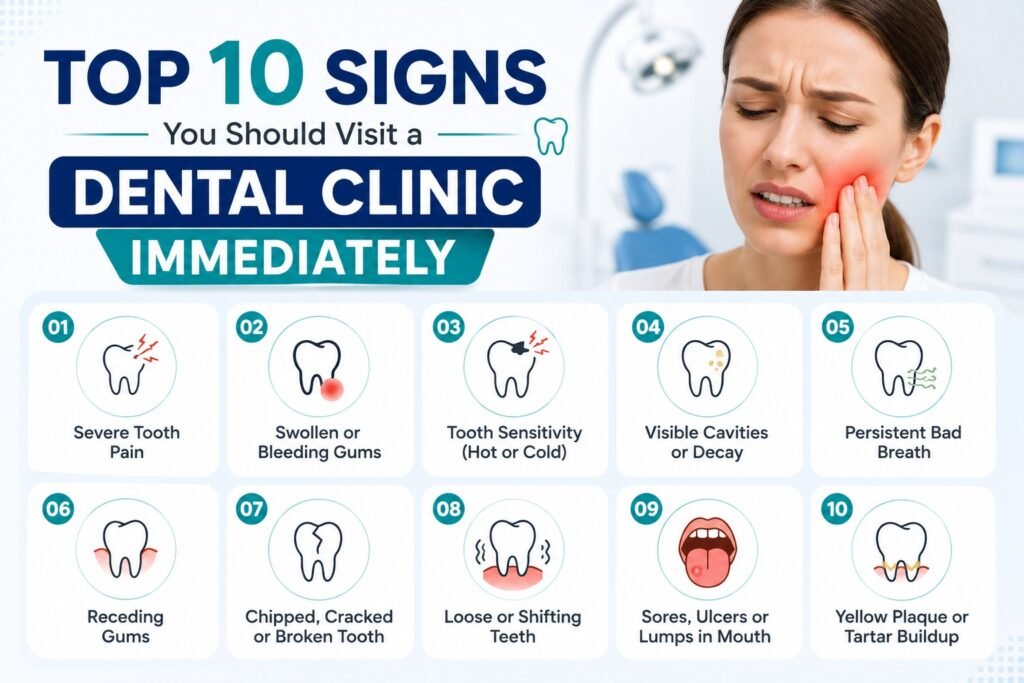
Top 10 Signs You Should Visit a Dental Clinic Immediately
1. Persistent Tooth Pain
If your tooth pain lasts more than 24–48 hours, visit a dentist immediately.
Tooth pain is one of the most common signs of dental problems.
Possible causes:
- Cavities
- Tooth decay
- Infection
- Cracked tooth
- Abscess
Example
A small cavity can quickly reach the tooth nerve, leading to severe pain.
Practical Tip
Never ignore sharp or throbbing pain.
2. Bleeding Gums
Bleeding gums during brushing or flossing often indicate gum disease.
Healthy gums should not bleed.
Common causes:
- Gingivitis
- Periodontitis
- Poor oral hygiene
- Plaque buildup
Warning
Untreated gum disease can lead to tooth loss.
3. Persistent Bad Breath
Chronic bad breath can indicate bacterial buildup, gum disease, or infection.
Bad breath is not always caused by food.
Possible causes:
- Gum disease
- Tooth decay
- Dry mouth
- Oral infection
If mouthwash does not help, consult a dental expert.
4. Tooth Sensitivity
Pain when consuming hot, cold, or sweet foods can indicate enamel damage or decay.
Sensitivity may signal:
- Worn enamel
- Gum recession
- Cavities
- Cracked teeth
Ignoring sensitivity can worsen the condition.
5. Swollen or Painful Gums
Swelling, redness, or tenderness in gums should never be ignored.
This may indicate:
- Infection
- Gum disease
- Abscess
Symptoms may include:
- Pain
- Swelling
- Redness
- Pus formation
Seek immediate dental care.
6. Loose Teeth
Adult teeth should never feel loose.
Loose teeth may result from:
- Bone loss
- Advanced gum disease
- Trauma
- Infection
Immediate care can help save the tooth.
7. Mouth Sores That Don’t Heal
Any sore lasting more than two weeks needs professional evaluation.
Possible causes:
- Infection
- Trauma
- Nutritional deficiency
- Oral cancer
Early detection is essential.
8. Jaw Pain or Clicking
Pain or clicking in the jaw may indicate TMJ disorders or bite issues.
Common symptoms:
- Jaw stiffness
- Clicking sound
- Headaches
- Difficulty chewing
Professional diagnosis is important.
9. Broken, Chipped, or Cracked Tooth
Even minor cracks can worsen without treatment.
Damage can expose sensitive inner layers.
Risks include:
- Infection
- Pain
- Structural damage
Visit a dentist immediately.
10. Difficulty Chewing or Biting
Pain while chewing often indicates underlying dental problems.
Common causes:
- Tooth decay
- Infection
- Cracked tooth
- Gum issues
Early treatment prevents complications.
Warning Signs Comparison Table
| Symptom | Possible Cause | Urgency |
|---|---|---|
| Tooth Pain | Decay / Infection | High |
| Bleeding Gums | Gum Disease | Medium-High |
| Bad Breath | Infection / Bacteria | Medium |
| Sensitivity | Enamel Damage | Medium |
| Swollen Gums | Infection | High |
| Loose Teeth | Bone Loss | High |
| Mouth Sores | Infection / Other | High |
| Jaw Pain | TMJ Disorder | Medium |
| Broken Tooth | Trauma | High |
| Chewing Pain | Infection / Decay | High |
When Should You Visit a Dentist?
Visit a dentist immediately if symptoms cause pain, swelling, bleeding, or difficulty eating.
Do not wait if you notice:
- Severe pain
- Swelling
- Fever
- Bleeding
- Pus
- Broken teeth
Why Choose Cherian Clinic for Dental Care in Varanasi?
At Cherian Clinic, patients receive expert dental care using modern technology and personalized treatment plans.
Why Patients Trust Us
✔ Experienced dental professionals
✔ Advanced diagnostic technology
✔ Painless procedures
✔ Personalized care
✔ Modern dental clinic
Services include:
- Dental checkups
- Teeth cleaning
- Root canal treatment
- Dental implants
- Teeth whitening
- Braces & aligners
Signs You Need Emergency Dental Care
Seek urgent care if you experience:
- Severe swelling
- Tooth abscess
- Uncontrolled bleeding
- Severe pain
- Trauma
These conditions may require immediate intervention.
Expert Tips to Prevent Dental Problems
- Brush twice daily
- Floss daily
- Limit sugary foods
- Drink more water
- Visit a dentist every 6 months
Prevention is always better than treatment.
Frequently Asked Questions
Can tooth pain go away on its own?
Sometimes temporarily, but underlying problems usually worsen.
Is bleeding gums serious?
Yes. It often indicates gum disease.
How often should I visit a dentist?
Every 6 months for regular checkups.
When is tooth sensitivity serious?
If sensitivity persists or worsens.
Is bad breath always a dental issue?
Not always, but chronic bad breath often requires dental evaluation
Conclusion
Your mouth often gives warning signs before major dental problems develop.
Ignoring symptoms like tooth pain, bleeding gums, bad breath, or swelling can lead to serious complications. Early treatment helps protect your smile, reduces pain, and prevents expensive procedures later.
Listen to your body. If you notice any warning signs, don’t delay seeking professional care.
A healthy smile starts with timely action.